The draft NPPF – Key updates and suggested implications.
5 January 2026
The draft NPPF was released in December 2025 with the objective of meeting the Government’s aims in strengthening the role of national policy in driving sustainable growth and ensuring more consistent decision-making across England.
The consultation on the draft, which is open until 10th March 2026, aims to gather views on how national planning policy can support wider objectives, including data centres, energy thresholds and standardized inputs in viability assessments.
If you would like to access the full draft you can find it here National Planning Policy Framework: proposed reforms and other changes to the planning system however below is a summary of the proposed changes.
1. A new format and structure of the draft NPPF
The draft NPPF is divided into chapters with each chapter containing a brief objective followed by a set of policies. The policies are split into those for plan-making and those for decision-making, the latter forming a set of national decision-making policies. As such, the draft draws a clear structural distinction between:
- Plan-making policies — guiding how local plans and spatial development strategies are prepared; and
- National decision-making policies — intended to apply directly to planning applications and appeals.
The draft NPPF makes clear that:
- National decision-making policies should not be duplicated in local plans;
- Where local plan policies are inconsistent with national decision-making policy, they should be given very limited weight; and
- The national decision-making policies are intended to shape how development proposals are designed and how they are determined.
In practical terms, this shifts the decision making process towards a more consistent national framework — particularly where plans are out of date or slow to reflect national priorities.
2. A re-introduction of spatial planning
The forthcoming Strategic Planning Authorities are required to prepare a Spatial Development Strategy which must be positive, appropriate, effective, and consistent with national policy.
3. An Expansion of the Presumption in Favour of Sustainable Development
The presumption in favour of sustainable development would apply to all development proposals within settlements, unless the harms would substantially outweigh the benefits. Outside of settlements, the presumption would apply to a range of development types including the failure to demonstrate a 5 Year Housing Supply (as existing) and housing and mixed use sites within reasonable walking distance to a railway station (new).
4. Housing delivery
The draft NPPF confirms that the standard method for assessing housing need remains mandatory and central to plan making. It is noted that there is an emphasis to meet the needs of different groups in society and meet the broader range of tenures, whilst also strengthening support for rural housing.
There is a drive for urban and suburban densification.
There is an objective to provide increased support for SMEs. This is demonstrated through the introduction of a medium development category which includes 10 – 49 homes on sites of up to 2.5 hectares.
5. Green Belt and Grey Belt
A revised definition of Grey Belt land is provided. Furthermore, confirmation is provided that certain forms of development on Grey Belt land may be regarded as not inappropriate in Green Belt terms.
Where development is acceptable in principle, the policy test shifts to whether the benefits of the proposal are substantially outweighed by adverse effects — rather than requiring “very special circumstances” by default.
Green Belt boundaries may be altered in order to support development opportunities on land around suitable train stations where these are identified in the development plan.
6. Boosting economic growth
The revised document gives substantial weight to business growth, supports specific sectors such as logistics and AI Growth Zones, and seeks views on removing the town centre sequential test.
7. Proposed changes to protected sites and landscapes
Environmental Delivery Plans and payments into the nature restoration levy are addressed as alternatives to appropriate assessment in relation to the protection of Habitats site. This move reflects the direction within the Planning and Infrastructure Act 2025.
8. Proposed changes to heritage assets
There are now three categories of harm; ‘harm’, ‘substantial harm’, and ‘total loss’.
9. Biodiversity Net Gain
The government has set out its intentions for applying BNG easements and exemptions for different categories of site and has confirmed that it will set out details outside of this NPPF consultation in the New Year. In previous announcements, the Government has indicated that sites of under 0.2 ha will be exempt from BNG.
It is noted that mandatory swift bricks and protection for chalk streams both feature in the draft text.
10. Climate Change
Clearer policies for climate change mitigation and adaptation are introduced, including promoting sustainable transport, energy-efficient designs, and renewable energy.
Final thoughts
Paul Fong, MD for MEP advised “the changes proposed are far reaching and the outcome needs to be carefully monitored. The level of detail will be crucial in assessing whether or not the changes will meet the Government’s objectives. MEP will be responding to the consultation in due course.”
If you have any questions relating to the impact of the proposed changes upon your site, please contact to not hesitate to contact us.
Other News
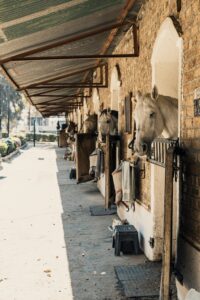
Retrospective planning permission has been secured for over 2,250 m2 of equestrian buildings, including ancillary accommodation, at Kilsby Grange, Northamptonshire. MEP were instructed by a private client to regularise the position on site following an enforcement enquiry by West Northamptonshire Council. The site comprises an established residential property in the open countryside with associated equestrian […]
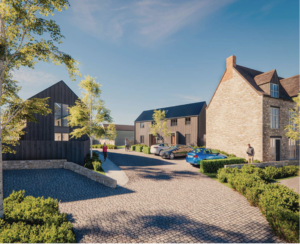
On behalf of Renishaw PLC, the MEP team is delighted to have secured permission for the conversion of two existing buildings to 5 dwellings alongside the erection of 4 new dwellings in the town centre of Wotton-Under-Edge. The existing buildings, which were formerly a schoolhouse and an office building, comprise one Grade II listed building […]

The Government has today (17 August 2026) published a new version of the National Planning Policy Framework (NPPF). It follows the draft NPPF published for consultation on 16th December 2025 and replaces the previous NPPF published in 2024. This article provides a summary of the main changes and looks at the implications of these reforms upon developers, […]