RING IN THE CHANGES – THE GOVERNMENT’S OVERHAUL OF THE NPPF
13 December 2024
Yesterday (12th December) the Government published the new NPPF, the aim being to deliver 1.5 million new homes over five years and deliver the ‘biggest boost in social and affordable housebuilding in a generation’. This new NPPF is the result of extensive consultation with a renewed focus of housing supply and infrastructure.
For reference the new NPPF itself is here.
For decision making, the NPPF is effective immediately. Some of the changes lay out the groundwork for strategic plans of the future, however many of the changes will have immediate consequences in the decision-making process. Whilst there is a lot to digest, below is a summary of the main changes to the updated NPPF.
- HOUSING PROVISION – RESTORATION OF THE 5 YEAR HOUSING LAND SUPPLY.
An updated Standard Method for calculating local housing need, which is applicable from today, prescribes up to 370k new homes nationally a year. Mandatory housing targets are reinstated, and all councils will be required to set housing targets according to the Standard Method rather than using differing metrics from council to council. Almost everywhere in the UK, except London, will have their targets increased significantly compared with what had been previously expected. In such areas this may now mean that many more local authorities can no longer demonstrate a five-year housing land supply (5YHLS).
The new NPPF 2024 reverses the changes to the 5YHLS made in late 2023. Local Planning Authorities (LPAs) will now once again need to demonstrate a 5YHLS, regardless of how recently their local plan was adopted.
A lack of 5YHLS can constitute very special circumstances for development on Green Belt land. This issue is explored in greater detail below.
Importantly, if Local Plans are in excess of 5 years post-adoption, housing policies contained therein are considered to be out of date, even when there is no obvious housing shortfall. The consequence is that the tilted balance will therefore apply if an authority can demonstrate a 5YHLS but the local plan exceeds 5 years post adoption.
Local authorities can no longer use their oversupply from previous years in the 5YHLS calculation.
The only way a Council will be able to reduce its housing requirement is if there are local constraints on land and delivery, including national parks, flood risk areas and protected habitats, however this would need to be evidenced to justify that lower delivery.
- LOCAL PLANS
A number of measures have been put in place to ensure that principal authorities develop or update local plans to meet the needs of their communities. Local authorities will have 12 weeks to commit to a timetable to ensure new local plans are compliant with the new NPPF. The new NPPF will apply starting on 12 March 2025.
A six year housing land supply requirement comes into effect for local authorities with a local plan housing requirement over five years old, where it is 80% or less of the level set by the new Standard Method.
The role of neighbourhood plans continues to be of importance, with the protections retained for five-years where these are up to date.
- BROWNFIELD/PREVIOUSLY DEVELOPED LAND
Emphasis is placed upon the need for planning policies and decisions to approve brownfield schemes within settlements through a new presumption policy. The NPPF now states that proposals should be approved (on such land) unless substantial harm would be caused. Furthermore, the definition of previously developed / brownfield land expands to include “large areas of fixed surface infrastructure such as large areas of hardstanding which have been lawfully developed”. Glasshouses are not however included within the definition of Brownfield.
- GREEN BELT /GREY BELT
One of the main changes is that exceptional circumstances include instances where an authority cannot meet its identified need for homes, commercial or other development through other means. If that is the case, authorities have been instructed to review Green Belt boundaries and propose alterations to meet these needs in full, unless the review provides clear evidence that doing so would fundamentally undermine the purposes (taken together) of the remaining Green Belt.
When reviewing those boundaries, authorities should turn first to previously developed / brownfield land, then to so-called grey belt and only after that to non-brown non-grey green belt. So long as those areas are locationally sustainable.
As such, in certain circumstances, a scheme is deemed to be no longer inappropriate development if it does not cause substantial harm to the Green Belt in areas which cannot meet their identified need for new homes.
Under the new NPPF, helpfully a definition of grey belt land is provided. Grey belt is defined as ‘land in the Green Belt comprising Previously Developed Land and/or any other land that, in either case, does not strongly contribute to any of purposes (a), (b), or (d) in paragraph 143. ‘Grey belt’ excludes land where the application of the policies relating to the areas or assets in footnote 7 (other than Green Belt) would provide a strong reason for refusing or restricting development.‘
Importantly, therefore, the contribution to purpose (c) is excluded from the definition of “grey belt”. Purpose (c) is “assisting in safeguarding the countryside from encroachment”.
Significantly, development on grey belt land would not be inappropriate “where:
a. The development would utilise grey belt land and would not fundamentally undermine the purposes (taken together) of the remaining Green Belt across the area of the plan;
b. There is a demonstrable unmet need for the type of development proposed;
c. The development would be in a sustainable location, with particular reference to paragraphs 110 and 115 of this Framework; and
d. Where applicable the development proposed meets the ‘Golden Rules’ requirements set out in paragraphs 156-157.”
The Golden Rules
The new NPPF 2024 introduces “Golden Rules” that set clear criteria for granting planning permission on Green Belt land. Proposals that meet these standards are given significant weight in favour of approval, as outlined in paragraph 156 of the NPPF.
This ensures that necessary developments contribute meaningfully to housing, infrastructure, and environmental goals while respecting the Green Belt’s integrity.
The three golden rules are:
- Affordable housing: Developments must provide at least 50% affordable housing or exceed local policy requirements by 15% where such policies exist. In areas without specific affordable housing policies, the default requirement is 50%.
- Infrastructure improvements: Proposals must incorporate essential upgrades to local or national infrastructure, ensuring that development is supported by adequate facilities and services.
- Green space enhancements: Proposals must create or improve accessible green spaces, enhance the landscape setting, and contribute to environmental quality. These green spaces should align with local and national standards for accessibility and biodiversity.
Paragraph 158 makes it clear that developments adhering to the Golden Rules should carry significant weight in planning decisions.
Though Grey Belt offers the potential for more Green Belt release, the new NPPF still prioritises brownfield land as the preferred route for delivery.
- FLOOD RISK/SEQUENTIAL TESTS
There has been a change to the requirement for a sequential test for flooding. A sequential test will be required where development itself (as opposed to open space or land for BNG etc) falls within the land at risk of flooding.
In line with the Government’s response to the consultation, there will also be further clarification on aspects of the sequential test in the Planning Practice Guidance in due course.
- ECONOMIC GROWTH AND RENEWABLE ENERGY
Despite the Government’s objective of boosting economic growth, the new NPPF does not set out employment floorspace targets, nor does it prescribe any method for assessing employment land supply.
The revised NPPF sets out the Government’s ambition for growth to deliver economic development, with the Government focused on development of commercial sites to meet the needs of a modern economy. This includes a range of economic uses including laboratories, gigafactories, data centres, digital infrastructure, freight and logistics.
- PROMOTING SUSTAINABLE TRANSPORT
The main change here is the requirement that decision-makers take a “vision-led” approach to transport planning. The objective is to move away from merely predicting peak car usage and building the necessary roads. Instead, where possible, decision-makers should seek to develop different kinds of infrastructure in the long term, by developing local areas to make them sympathetic to new and more sustainable forms of travel.
- MAKING EFFECTIVE USE OF LAND
A slight rewording of para 125 (c) strengthens the weight which should be given to brownfield land within settlements for homes. This now states;
“Planning policies and decisions should […] give substantial weight to the value of using suitable brownfield land within settlements for homes and other identified needs, proposals for which should be approved unless substantial harm would be caused.”
The Government has also amended the policy around density. Paragraph 130 of the previous edition has been removed, which suggested that uplifts in density “may be inappropriate if the resulting built form would be wholly out of character with the existing area”.
Further, the definition of previously developed land has been widened, now incorporating hardstanding.
- DESIGN
Whilst the word ‘beautiful’ has been removed, emphasis is placed on the need for high quality design which is to be achieved through coding and guides. The fundamental presumption – “development that is not well designed should be refused” – remains intact. Conversely, significant positive weight goes to development that reflects local design guidance.
- MOVING FORWARD
The Government has indicated that policy reform is not intended to stop with the new NPPF. New detailed guidance on viability and other matters is to be published in the New Year and there is to be full consideration of the introduction of National Development Management Policies.
Other News

Retrospective planning permission has been secured for over 2,250 m2 of equestrian buildings, including ancillary accommodation, at Kilsby Grange, Northamptonshire. MEP were instructed by a private client to regularise the position on site following an enforcement enquiry by West Northamptonshire Council. The site comprises an established residential property in the open countryside with associated equestrian […]
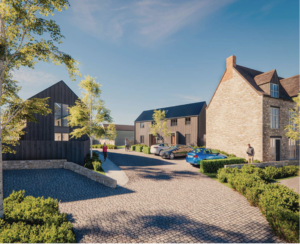
On behalf of Renishaw PLC, the MEP team is delighted to have secured permission for the conversion of two existing buildings to 5 dwellings alongside the erection of 4 new dwellings in the town centre of Wotton-Under-Edge. The existing buildings, which were formerly a schoolhouse and an office building, comprise one Grade II listed building […]
The Government has today (17 August 2026) published a new version of the National Planning Policy Framework (NPPF). It follows the draft NPPF published for consultation on 16th December 2025 and replaces the previous NPPF published in 2024. This article provides a summary of the main changes and looks at the implications of these reforms upon developers, […]