We have a new Government!
5 July 2024
In what is being seen as the most dramatic landslide victory in recent years, Britain has woken up to a Labour Government for the first time in nearly a decade and a half.
Central to what was evidently the party’s election-winning platform are its proposals to overhaul the planning system, the Labour manifesto promised change and a major planning shake up. So just what are the implications for planning and development as a consequence of this change?
Below is a summary of the Labour party manifesto;
1. A pledge to build 1.5 million homes over the next five years, which equates to delivering 300,000 homes per year over the next Parliament.
2. Preserving the green belt, but taking a ‘strategic approach’ to releasing ‘lower quality ‘grey belt’ land, while maintaining a “brownfield first approach.
3. A pledge to build new towns. In the manifesto, the party reiterated a pledge to build “a new generation of new towns”. Provided with the working title of a ‘towns bill’, these alongside urban extensions and regeneration projects, would “form part of a series of large-scale new communities across England”, the party said.
4. A promise to deliver more social and affordable housing via ‘strengthened’ planning obligations. The manifesto also included a commitment to “deliver the biggest increase in social and affordable housebuilding in a generation”. This is to be achieved by strengthening planning obligations to ensure new developments provide more affordable homes and “support[ing] councils and housing associations to build their capacity and make a greater contribution to affordable housing supply”. There is no clear target for how many affordable or social homes the party will help deliver.
5. Labour pledged to give regional mayors and combined authorities more planning powers. Combined authorities would be provided with “new planning powers along with new freedoms and flexibilities to make better use of grant funding”.
6. A commitment to introduce “cross-boundary strategic planning” and a requirement for combined and mayoral authorities to strategically plan for housing.
7. A promise to sanction local planning authorities that fail to update their local plans.
8. A pledge to reverse the Conservatives’ December 2023 National Planning Policy Framework (NPPF) changes. Labour has promised to “immediately update the National Policy Planning Framework to undo damaging Conservative changes, including restoring mandatory housing targets.
9. A pledge to “reform and strengthen” the NPPF’s presumption in favour of sustainable development. If applied, the presumption penalty renders a council’s housing supply policies out of date and currently applies to authorities with poor housing delivery records, as measured by the government’s annual housing delivery test, or with an insufficient pipeline of deliverable housing supply.
10. A commitment to appoint 300 new planning officers.
11. The party pledged to help deliver homes “affected by nutrient neutrality”.
12. A commitment to make homes that are high quality and places that are “climate resilient” whilst promoting nature recovery”.
13. A promise to abolish compulsory purchase order (CPO) “hope value”. Labour also confirmed its plan to reform compulsory purchase compensation rules, to ensure that for specific types of development schemes, landowners are awarded fair compensation rather than inflated prices based on the prospect of planning permission.
14. A pledge to develop a ten-year infrastructure strategy. The party this would “guide investment plans and give the private sector certainty about the project pipeline”.
15. A promise to create a new infrastructure government agency. Labour further pledged to “create a new National Infrastructure and Service Transformation Authority, bringing together existing bodies, to set strategic infrastructure priorities and oversee the design, scope, and delivery of projects”. The strategy would also be aligned with the party’s proposed “industrial strategy and regional development priorities”, including “improving rail connectivity across the north of England”, the manifesto said.
16. A pledge to “forge ahead” with new transport infrastructure.
17. A commitment to set out new national policy statements (NSP) and “benefits” for communities affected by development. With the objective of making projects faster and cheaper by slashing red tape, Labour promises to build support for developments by ensuring “communities directly benefit”. The manifesto does not specify what kinds of development these new NPSs would cover.
19. A pledge to update national planning policy to help deliver laboratories, digital infrastructure and gigafactories.
20. Mayors will have a “duty to promote and grow the use of rail”.
Perhaps welcome news for planners is that Labour did not include proposals for a community right of appeal in its manifesto. Various politicians from across the political spectrum have flirted with this idea during the past decade, however it has been appreciated that the community right of appeal could be problematic, particularly for Labour’s goals to accelerate the rollout of energy infrastructure.
MEP’s Managing Director, Paul Fong’ commented
“Many of these proposals are welcomed; Labour appears to be committed to growth, and the UK needs such a plan. There is a need for more direct policy intervention to encourage the building of a generation of new towns, urban extensions and regeneration projects. Importantly there is a desperate need to strengthen and enhance our infrastructure to directly support our sustainable growth and I believe that the Labour Government will support this. I do sincerely hope that Labour can meet their pledge to deliver 1.5 million homes over the course of the parliament which will assist in meeting the very real housing crisis, and we are looking forward to seeing a clear indication of how this pledge will be implemented. Re-introducing housing targets along with the pragmatic approach to green belt release is also a positive step forward. We will see how this Government will address the climate change emergency and we hope that they will invest more in sustainable transport interventions. As always, however, the devil will lie in the details which are currently rather sparse.”
Other News

Retrospective planning permission has been secured for over 2,250 m2 of equestrian buildings, including ancillary accommodation, at Kilsby Grange, Northamptonshire. MEP were instructed by a private client to regularise the position on site following an enforcement enquiry by West Northamptonshire Council. The site comprises an established residential property in the open countryside with associated equestrian […]
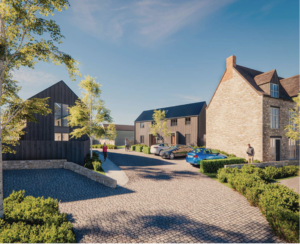
On behalf of Renishaw PLC, the MEP team is delighted to have secured permission for the conversion of two existing buildings to 5 dwellings alongside the erection of 4 new dwellings in the town centre of Wotton-Under-Edge. The existing buildings, which were formerly a schoolhouse and an office building, comprise one Grade II listed building […]

The Government has today (17 August 2026) published a new version of the National Planning Policy Framework (NPPF). It follows the draft NPPF published for consultation on 16th December 2025 and replaces the previous NPPF published in 2024. This article provides a summary of the main changes and looks at the implications of these reforms upon developers, […]